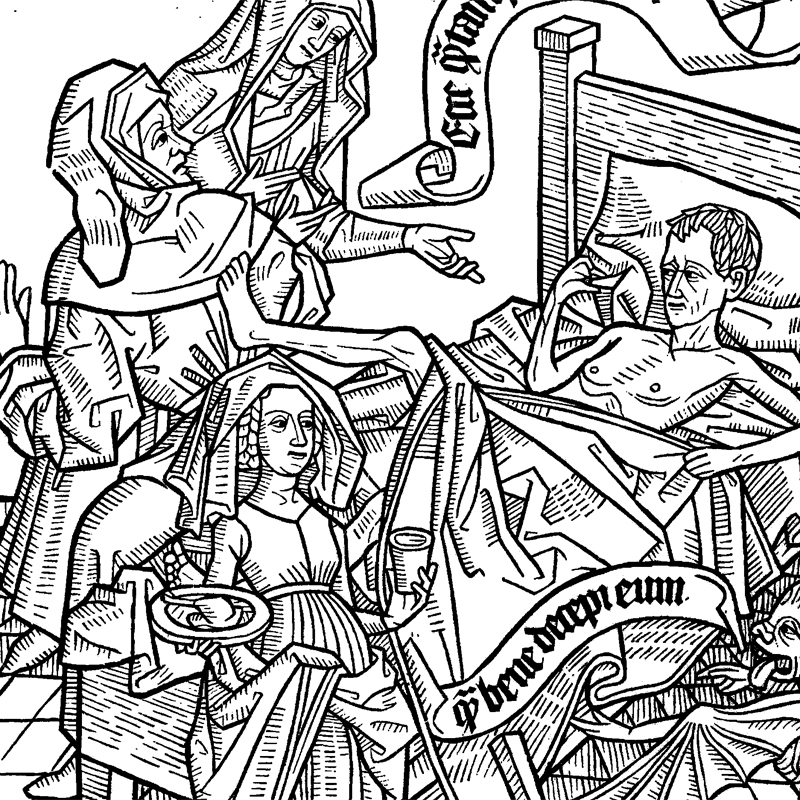
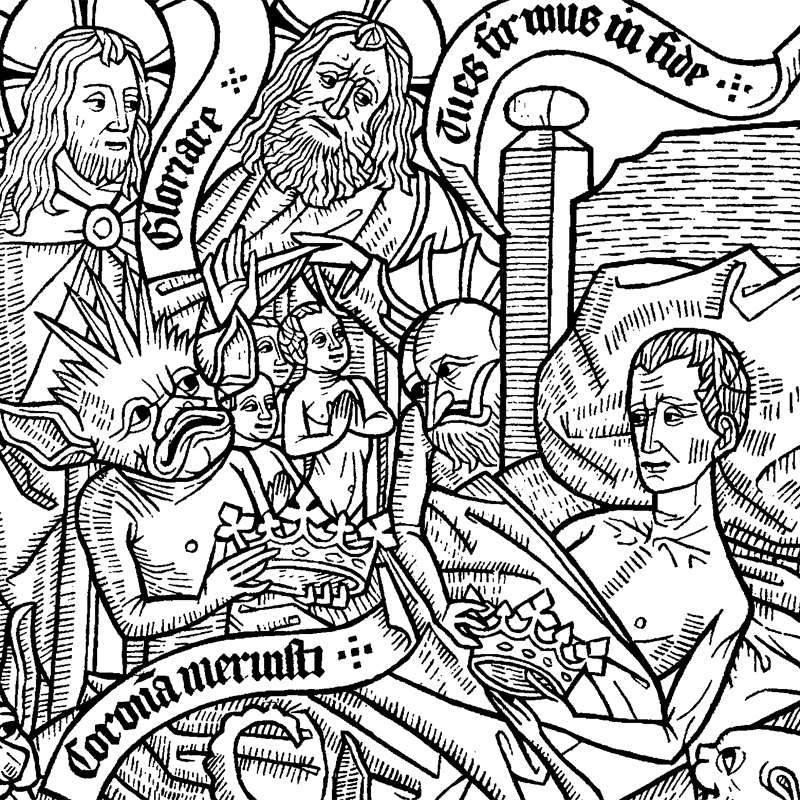
We are born to die. This inevitable fact could lead to fatalism, but more often we simply fall into denial. We avoid thinking about death and stigmatize it as the greatest evil. If this world is all we have then death would be the greatest evil. Life would seem futile, a temporary illusion, a grasping pleasure as it slips through our fingers. For a Catholic however, we are born to live eternally. The inevitability of death remains although it loses its terror. To be sure, it should stimulate sober reflection on the purpose of this life as a temporary sojourn, meant to lead us to our true and everlasting life in God. The Church encourages us to think about death and to prepare for it, even to the point of considering it an “art.”
One of the most popular books of the late Middle Ages, in fact, was titled “Ars Moriendi” or the “Art of Dying” written by an anonymous Dominican friar around the year 1415. This work of timeless theological wisdom, recognizes that the salvation of each person consists entirely in the preparation for death. Approaching death as an art entails deliberate preparation to approach it as a spiritual reality. Death is the crucial moment to offer oneself to God, the culminating moment that will seal our eternity.
At the hour of death, every person is exceedingly vulnerable to the devil who will come to steal his soul through Five Temptations. It is our beloved Guardian Angel who enlightens and strengthens us during this battle. Below is a summary of the meditations that refute the temptations of the devil, and effective responses to the devil inspired by the Guardian Angel. Learn to use these tools well! R. Jared Staudt.
♱ 1st Temptation Against Faith ♱
The Devil Speaks to the Dying Person:
The devil attempts with all his strength to turn the dying person entirely away from his Catholic Faith, or to lead him to stray from it. The devil whispers in his ear, “You wretch! You are mistaken, there is no hell! Hell has been shattered.” The devil continues, “No one returns from the dead to tell you the truth about the after-life and so your faith is for nothing!”
Here the devil knows that if he can cause a blow to the dying person’s foundation of faith, everything built upon it will crumble.
*These false ideas were promoted by the modernist theologian, Fr. Hans Urs von Balthasar in his book, “Dare to hope that Hell is empty.”
The Response of the Dying Person
As soon as the dying person perceives that he is being tempted against faith, he should first consider how necessary hope and faith are for his eternal salvation. The dying person’s Guardian Angel gives good inspiration saying, “O Man, do not believe the pernicious suggestions from the devil, he is a liar! Do not doubt your Catholic faith even though you cannot comprehend it by your senses or intellect.”
The dying person should recite the scriptures: “All things whatsoever you ask when you pray, believe that you shall receive, and it shall come unto you.” (Mk 11:24). The dying person or those attending to him, should repeatedly recite the Nicene Creed aloud to drive the devil away, who hates hearing it. By the grace of God, the dying person can use these weapons to resist the devil’s attacks on his Faith.
Temptation Against Faith
♱ 2nd Temptation To Despair ♱
The Devil Speaks to the Dying Person:
The devil temps the dying person to Despair which opposes the hope and confidence he should have in God. The devil aggregates the dying person’s bodily suffering, by insinuating memories of past sins, especially those he has not confessed.
The devil as accuser says, “You wretch! Look at your sins, which are so great that you will never be able to receive pardon! Like Cain, your sins are too great to forgive. You have lived a life of Pride, Greed, Lust, Gluttony, Wrath, Envy and Sloth. You have so many times failed to do works of mercy.”
The devil knows that a person who despairs of true pardon will fall into sin and lose the mercy of God. He will continually try to tempt the dying person to fall into despair, because nothing offends God more.
The Response of the Dying Person:
As soon as the dying person perceives that he is being tempted to despair, he should first consider how necessary it is to have the hope of salvation for his goal of attaining Heaven. The dying person’s Guardian Angel gives good inspiration saying, “O Man, why do you despair? Even if you alone committed all the sins of the world, even if you have never done penance or confess them, you can have recourse to true contrition.”
Remember that Christ was crucified for miserable sinners, not the just. Many of the saints were enormous sinners who repented: Peter denied Our Lord three times, Mary Magdalene was an adulteress, Saul persecuted the Church, the Good Thief blasphemed Our Lord on the Cross. The most detestable sinner who did not repent and beg forgiveness of Our Lord was Judas Iscariot. Judas despaired and by doing so he sinned even more grievously than those who crucified Christ.
The dying person should recite scriptures: “A contrite and humbled heart, O God, thou wilt not despise” (Ps 50:19). “When the wicked turn himself away from his wickedness, which he hath wrought and doeth judgment and justice, he shall save his soul alive.” (Ez 18:27).
Temptation to Despair
♱ 3rd Temptation To Impatience ♱
The Devil Speaks to the Dying Person:
The devil temps the dying person to Impatience by asking, “You wretch, why do you endure such heavy suffering?” He will whisper, “No one has compassion for you! For even if your friends express compassion, they really only desire the goods you will relinquish to them and the possessions you will leave behind.”
The devil knows that impatience opposes the virtue of charity to love God above all things, and to endure physical suffering from prolonged infirmities or unexpected sources.
Those dying unprepared are tempted to impatience and grumbling and as a result may suffer excessively while losing their mind and good sense. The devil knows that if anyone suffers illness or death with indignation, his soul may be lost.
The Response of the Dying Person:
As soon as the dying person perceives that he is being tempted to impatience, he should first consider that even with afflictions, gratitude is necessary for both consolation and final perseverance. The dying person’s Guardian Angel gives good inspiration saying, “O Man, turn your mind away from the devil who seeks to defeat your soul with his deadly prodding and vexations. For no one who murmurs will inherit the Kingdom of Heaven. Your sickness is a form of purgatory if you tolerate it willingly with gratitude.”
God mercifully allows sufferings and illnesses as temporal chastisements, to avert eternal punishment for your sins. Let not tribulations disturb you, since they are from the loving Christ, who will never abandon you. Drive out any temptation to impatience as if it were as deadly as the plaque. Instead take up patience as an indestructible shield by which all enemies of the soul are overcome. It is more meritorious to bear adversities than to toil over good works, says St. Gregory.
We can rise to the level of martyrdom without the sword, by simply preserving patience within our soul. The unity of your mind and heart can be preserved through patience, says the scripture, “In your patience you shall possess your souls.” (Lk 21:19). Turn your gaze towards Christ, who was the most patient and obedient and state aloud, “He humbled himself, becoming obedient unto death, even to the death of the cross.” (Phil 2:8).
Temptation to Impatience
♱ 4th Temptation To Vainglory ♱
The Devil Speaks to the Dying Person:
The devil temps the dying person to Vainglory by instilling in them a spiritual pride and self-satisfaction. This is especially dangerous for the religious and devout soul who may succumb to a false sense of superiority over the rest of men. The devil whispers in the dying person’s ear, “You fool, look how many good things you have done, compared to other men. You are not like the others who have committed countless serious sins. You will surely take a higher place in heaven. Worry not about confessing.”
The devil knows that pride comes before the Fall and it is a blasphemy to presume that the good he has done is from himself, rather than inspiration from the Almighty God.
The Response of the Dying Person:
As soon as the dying person perceives that he is being tempted to Vainglory, he should humble and subdue himself by reflecting on all his past sins. The dying person’s Guardian Angel gives good inspiration saying, “O Man, why are you prideful? Do not be deceived, for any constancy in faith, hope or patience you must attribute to God alone. Do not falsely boast or praise yourself, for nothing good comes from yourself, except through the gratuitous generosity of God.” Repeat the scripture that says, “For without me you can do nothing.” (Jn 15:5).
Drive away the temptation to vainglory and remind yourself it is the humble of heart that pleases God. God makes his abode in you when you act with humility, and he withdraws from you when you exalt yourself.
Temptation to Vainglory
♱ 5th Temptation To Avarice ♱
The Devil Speaks to the Dying Person:
The devil temps the dying person to Avarice by saying, “You wretch, soon you will leave behind all the temporal goods you have amassed from your great effort. See what you are leaving behind, your spouse, children, friends, wealth and comforts!”
Here the devil attempts to instill an excessive attachment to the passing things of this world by recalling to the dying person’s memory, their loved ones, riches and other temporal goods that preoccupied them in life.
The devil knows that by doing this, he may lure the dying person to turn away from the love of God and his own salvation. He knows that an excessive attachment to relationships in this life can hinder his relationship with God and willingness to part with things of this life.
The devil does not want the dying person to focus on the state of his soul and his precious salvation, but be preoccupied with his worldly concerns, even unto his own death.
The Response of the Dying Person:
As soon as the dying person perceives that he is being tempted to Avarice, he should first consider that excessive worldly love separates him from God, because it excludes the love of God as the primary importance. It is through voluntary poverty at the moment of death that the dying person is blessed and leads him to heaven.
The dying person’s Guardian Angel gives good inspiration saying, “O Man, turn your ears from the deadly suggestion from the devil and place totally behind you all the things of this world, since it impedes the salvation of your soul.
It is essential to meditate on the poverty of Christ our merciful redeemer who willingly hung upon the Cross in agony, and left behind His most beloved Mother and dear disciples, all for your salvation!
Temptation to Avarice
♱ Conclusion ♱
If the dying person still has the use of their faculties and speech:
♱ Pour Forth their prayers to God. ♱ Beg the Lord through His Mercy and Passion, deign to receive him. ♱ Invoke the Blessed Virgin Mary, Mediatrix of all graces. ♱ Invoke his Guardian Angel, the Archangels and all the Choirs of Angels to come to his defense. ♱ Invoke the Apostles, Saints and Martyrs. ♱ Invoke St. Joseph, Patron of Departing Souls. ♱ Recite The Hour of Death Prayer (3 times):
In this hour of my death may the peace of our Lord Jesus Christ, the power of His Passion, the sign of His Holy Cross, the sinlessness of the Blessed Virgin Mary, the blessing of all the saints, the protection of all the Angels, the intercession of all the Elect, stand between me and all of my enemies, both visible and invisible. Into Your hands Lord, I commend my spirit. Amen.
If the dying person cannot pray for themself:
If the dying person cannot pray for themself, someone attending them should recite the above prayers for him aloud in his presence, instructing him to pray along in his heart with sincere longing. It is advised that everyone appoint for themselves in advance, a devout and faithful Catholic relative or friend who will reliably assist at the hour of his death, encouraging and praying for him as he suffers.